Startups rarely die from a bad idea. They die from running out of cash. These six concepts tell you how much time you have and whether your business model works.
Gross margin
Gross margin = (Revenue − COGS) / RevenueCOGS are the direct costs of delivering the product: hosting, payment fees, support, third-party APIs (including AI model costs). SaaS typically sits at 70–85%. If yours is far lower, every new customer makes growth more expensive than it looks.
Burn rate
Burn is the cash the company loses each month.
Net burn = Total expenses − RevenueGross burn is total spending; net burn is what actually leaves your bank account. Track net burn.
Runway
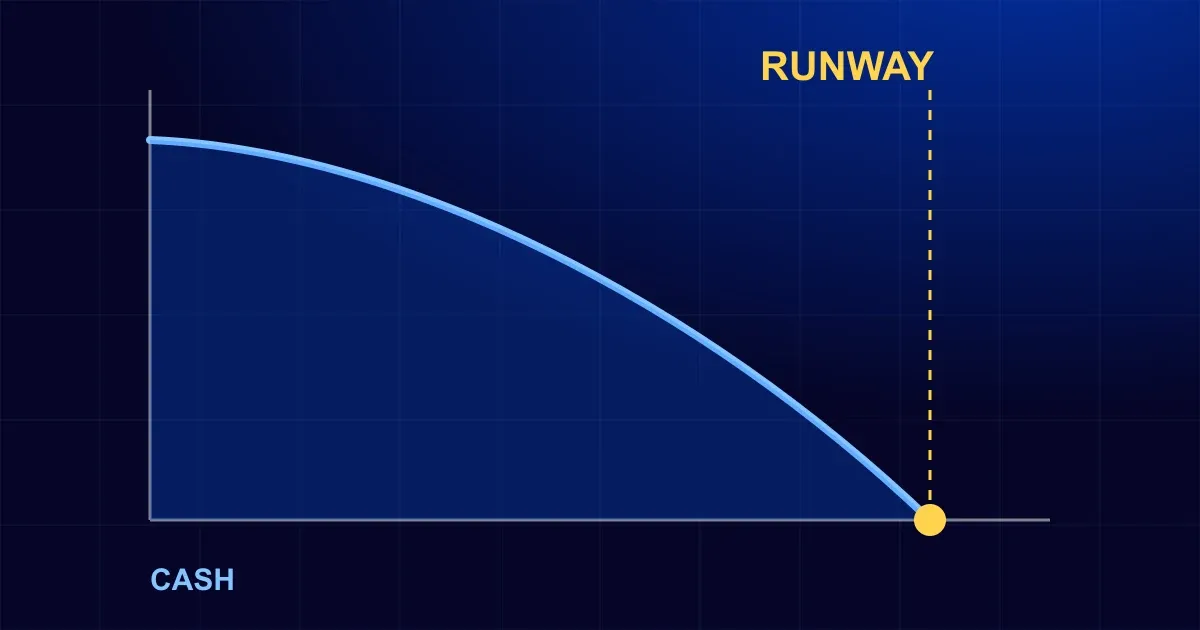
Runway (months) = Cash in bank ÷ Net burn$120,000 in the bank and $10,000 net burn per month is 12 months of runway. Rules of thumb: start fundraising with 9–12 months left; under 6 months you negotiate from weakness. Remember the number moves: if you hire, runway shrinks.
Default alive vs. default dead
Paul Graham’s test: at your current growth and spending, do you reach profitability before the money ends?
- Default alive: yes. You control your future.
- Default dead: no. You must raise money or cut costs.
Run this once a quarter, with honest growth assumptions.
Rule of 40
For maturing SaaS:
Annual growth rate (%) + EBITDA or free cash flow margin (%) ≥ 40%Growing 60% while losing 15% scores 45: fine. Growing 10% and breaking even scores 10: you are neither efficient nor fast. It balances growth against profit.
Ramen profitable
Ramen profitable means revenue covers the founders’ basic living costs. It does not make the company rich; it removes the pressure. You can negotiate with investors, say no to bad deals, or never raise at all.
A monthly finance routine
- Update cash, burn and runway.
- Check gross margin per customer segment.
- Re-run the default alive test.
- Decide: cut, hold or invest.
Next: bootstrapping, angels or VC: which way to fund your business.